

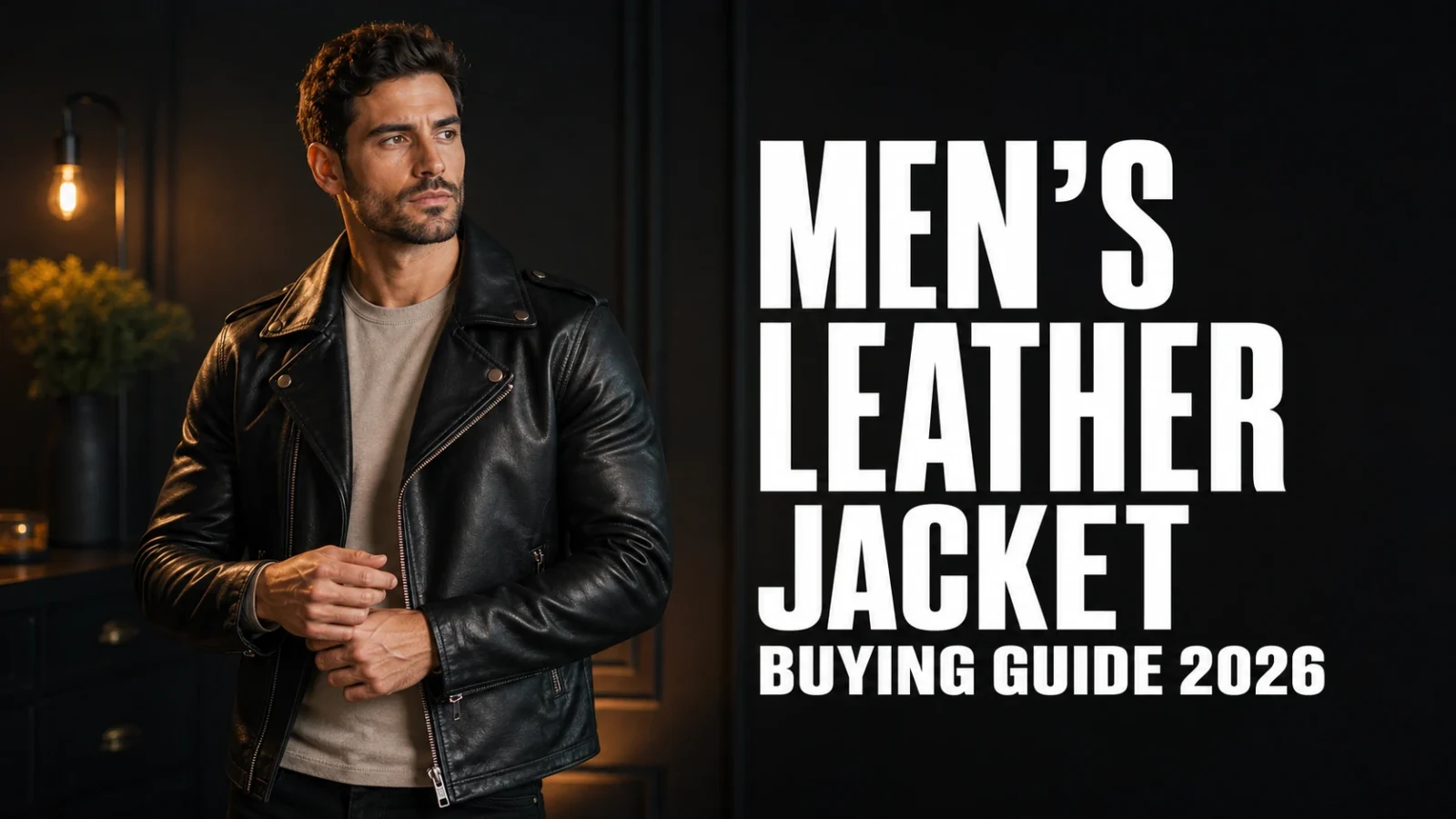
Why choosing the right leather jacket matters
A well-chosen leather jacket can become one of the most useful pieces in a man’s wardrobe. It can work with denim on the weekend, add structure to a simple T-shirt, and layer over knitwear when temperatures fall. The difficult part is not finding a jacket—it is choosing the right leather, style, construction and fit.
This men’s leather jacket buying guide explains what to check before ordering online. It covers common leather types, popular silhouettes, sizing, color, hardware, lining and care so you can choose a jacket that suits your body, climate and everyday style.
1. Decide how you will wear the jacket
Your lifestyle should guide the purchase. A clean café-racer or bomber jacket is easy to wear every day. Meanwhile, a biker jacket creates a stronger visual statement. For a more casual look, a hooded jacket works well, while a puffer or shearling design provides more insulation.
Ask yourself these questions before comparing products:
- Will I wear it mainly for fashion, commuting, travel or riding?
- Do I need a lightweight layer or cold-weather insulation?
- Will I wear it over a T-shirt, shirt, sweater or hoodie?
- Do I prefer a close silhouette or a relaxed fit?
- Which color already works with most of my wardrobe?
If you want a versatile starting point, browse the complete men’s leather jacket collection and compare silhouettes before focusing on individual details.
2. Understand the main leather types
Sheepskin leather
Sheepskin is known for its soft hand feel, light weight and flexibility. It usually requires less break-in time than heavier hides, making it practical for everyday fashion jackets. In addition, it works especially well for bomber, hooded and streamlined biker designs.
Cowhide leather
Cowhide is usually thicker, firmer and more structured. It develops character with wear and is a strong option for rugged biker, motorcycle and vintage-inspired jackets. Because it can feel stiffer when new, buyers who prioritize comfort should check the product description and intended fit carefully.
Suede leather
Suede has a soft, brushed surface and a refined appearance. It works well for smart-casual outfits but needs more protection from rain, stains and rough handling. A suede jacket is best for someone willing to follow careful cleaning and storage habits.
Shearling leather
Shearling combines a leather or suede exterior with a warm wool or fur-style interior. It is designed for cold weather and naturally creates a heavier silhouette. If warmth is your priority, explore men’s shearling leather jackets.
3. Know what the leather finish means
The finish affects how the leather looks, feels and ages. Aniline leather has a natural appearance and visible grain, but it can be more sensitive to marks. Semi-aniline leather uses a light protective coating while retaining much of the natural character. Heavily pigmented leather is more uniform and resistant to daily wear, although it may feel less natural.
There is no single finish that is best for everyone. Choose natural character if you enjoy patina and variation; choose a more protected finish if easy maintenance matters more.
4. Compare the most popular men’s leather jacket styles
Biker jacket
The biker jacket is recognized by its bold hardware, asymmetric or strong front closure, multiple pockets and structured shape. It pairs naturally with jeans, boots and plain tees. View the men’s biker jacket collection if you want a sharper, more expressive silhouette.
Bomber jacket
A bomber usually has a central zipper, relaxed body and rib-knit cuffs or waistband. As a result, it is one of the easiest leather styles to wear because its proportions work with casual wardrobes. Compare current men’s bomber leather jackets for classic and contemporary options.
Hooded leather jacket
A hooded jacket blends leather outerwear with a casual streetwear look. Some designs use an integrated hood, while others offer a removable hood for more styling flexibility. Explore men’s hooded leather jackets if you prefer practical layering and a relaxed appearance.
Puffer leather jacket
A leather puffer uses quilted construction to add insulation and volume. Therefore, it is suited to colder conditions and works best when the shoulders and chest fit cleanly without making the body look overly bulky. See the men’s leather puffer collection for winter-focused styles.
Leather vest
A leather vest provides the texture and structure of leather without full sleeves. It can be layered over a T-shirt, knit or hoodie and is available in biker, utility, puffer and tailored forms. Browse men’s leather vests to compare the main constructions.
Leather blazer
A leather blazer is the smarter option, combining a tailored lapel and clean front with the texture of leather. For example, it works well for dinners, creative offices and elevated casual outfits. It should follow the shoulders closely without pulling across the chest.
5. How should a men’s leather jacket fit?
A leather jacket should feel secure but not restrictive. The correct fit depends on the intended silhouette and what you plan to wear underneath, but these checkpoints apply to most styles:
- Shoulders: The shoulder seam should finish close to your natural shoulder edge.
- Chest: The jacket should zip or button without horizontal pulling or excess loose fabric.
- Sleeves: Full-length sleeves should usually finish around the wrist bone.
- Arm movement: You should be able to bend your elbows and reach forward comfortably.
- Body length: Biker and bomber jackets often finish near the waist, while coats and blazers run longer.
- Layering room: Add space if you regularly wear a sweater or hoodie underneath.
6. Choose between black and brown leather
Black leather creates a clean, sharp appearance and pairs easily with black, grey, white and dark denim. It is especially effective for biker, café-racer and minimalist jackets. Brown leather feels warmer and more relaxed, and it works naturally with cream, navy, olive, tan and blue denim.
For a first jacket, choose the color that matches the shoes and trousers you wear most often. Therefore, a jacket that integrates with your wardrobe will provide more value than a fashionable color that is difficult to style.
7. Inspect the construction before buying
A good product page should help you evaluate more than appearance. Check the following details:
- Stitching: Seams should look even and reinforced in high-stress areas.
- Zippers: Closures should appear substantial, aligned and appropriate for the jacket’s weight.
- Lining: Polyester, viscose, quilted and shearling-style linings provide different levels of comfort and warmth.
- Pockets: Confirm the number, location and closure type of both outside and inside pockets.
- Cuffs and waistband: Rib-knit finishes feel casual, while zipper or open-hem cuffs create a sharper silhouette.
- Collar: Band, shirt, hooded, notch and shearling collars each change the jacket’s appearance and weather protection.
8. How can you identify a quality leather jacket online?
Look for a precise material description, multiple high-resolution images, close views of the hardware and seams, a detailed size chart, clear lining information and an understandable return policy. In addition, product descriptions should identify the leather type and finish rather than relying only on vague phrases.
Also review the garment from multiple angles. Front, side and back images help you understand the true length, fit and panel construction. If a product page does not provide enough information to make a confident decision, ask for clarification before ordering.
9. Match the jacket to the climate
For mild weather, choose lighter sheepskin, an unpadded biker jacket or a leather vest. Meanwhile, a bomber or hooded leather jacket provides flexible layering during transitional seasons. Finally, for colder weather, look for quilted lining, puffer construction or shearling insulation.
Leather offers some wind resistance, but not every fashion jacket is designed for heavy rain. Always follow the product’s care instructions and avoid assuming that real leather is waterproof.
10. Care for the jacket from the first wear
- Store the jacket on a broad, supportive hanger.
- Keep it away from direct heat and prolonged sunlight.
- Blot moisture gently and allow it to dry naturally.
- Use only cleaners and conditioners suitable for the specific leather.
- Test any care product on a hidden area first.
- Use professional leather cleaning for difficult stains.
Final buying checklist
- Define the jacket’s main purpose and season.
- Select a style that complements your wardrobe.
- Choose a leather type and finish appropriate for your priorities.
- Measure your chest, shoulders and sleeves.
- Compare measurements with the product-specific size chart.
- Check the lining, closure, collar, cuffs and pockets.
- Review front, side and back product images.
- Read the shipping, return and care information.
The right leather jacket is not simply the most expensive or trend-driven option. It is the jacket whose material, silhouette, fit and construction match your real needs. Start with those four decisions and the buying process becomes much easier.
Frequently asked questions
Which leather is best for a men’s jacket?
Sheepskin is a strong choice for softness, flexibility and lighter everyday wear. Cowhide is better suited to buyers who want a firmer, more structured and rugged feel. The best option depends on comfort, climate and intended use.
What style of leather jacket is most versatile?
A clean bomber or café-racer jacket is generally the easiest to combine with casual and smart-casual clothing. In addition, a simple black or dark brown design with restrained hardware provides the greatest styling flexibility.
Should a leather jacket feel tight when new?
It can feel fitted, but it should not restrict breathing, arm movement or closure. Leather may soften with wear, but an incorrectly sized shoulder or chest should not be expected to transform completely.
Can you wear a leather jacket in the rain?
Light, brief moisture may be manageable for some finished leathers, but leather should not be treated as fully waterproof. Follow the manufacturer’s instructions, avoid heavy rain and allow a damp jacket to dry naturally.
How long should a leather jacket last?
There is no fixed lifespan. Leather quality, construction, frequency of wear, storage, climate and maintenance all affect longevity. Proper care and timely professional cleaning can significantly extend useful wear.
