

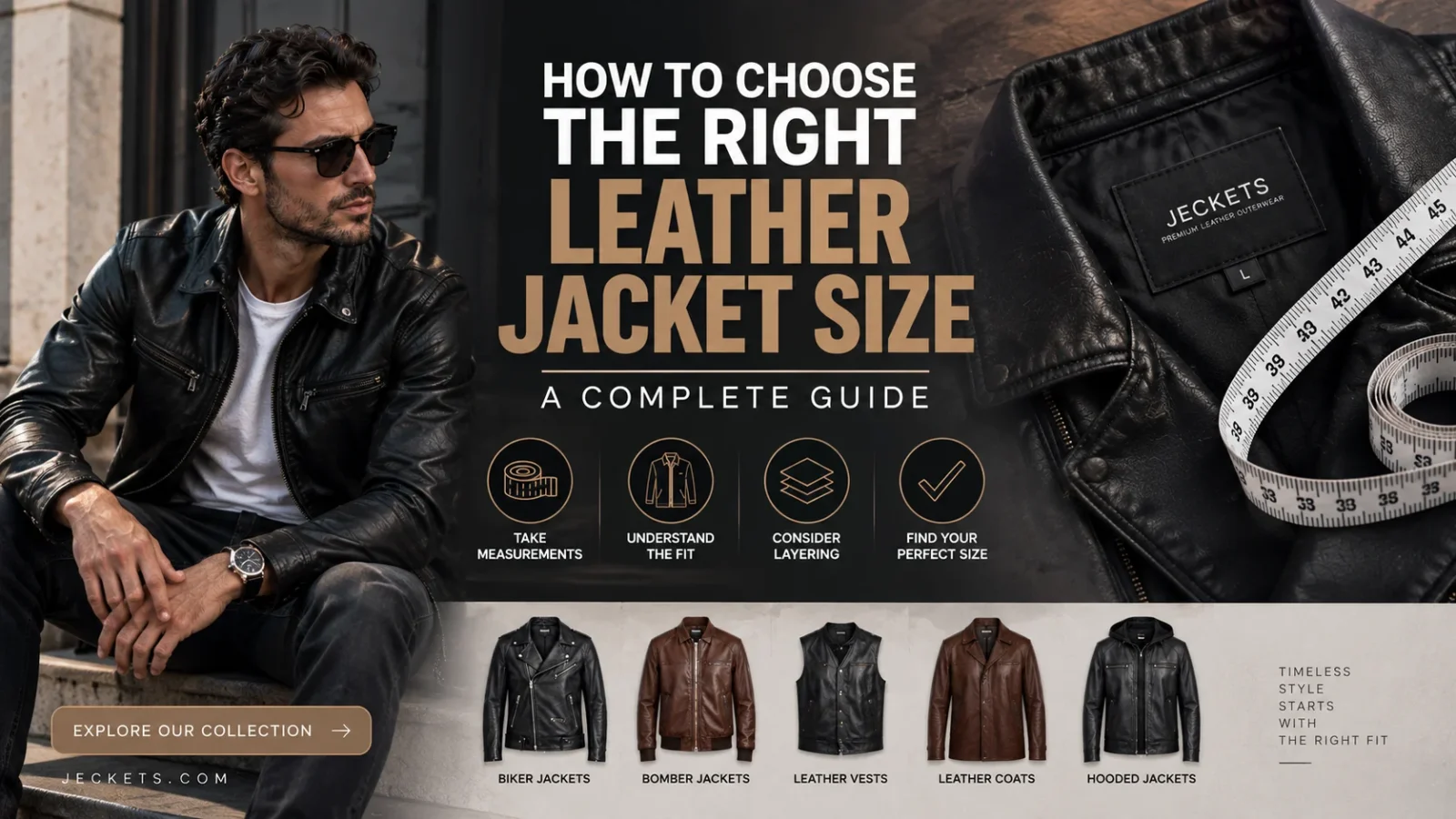
A Complete Guide
Buying a leather jacket online can be exciting, but choosing the right size can sometimes feel confusing. Unlike a loose sweatshirt or stretchable shirt, a leather jacket is structured and designed to fit in a particular way. The wrong size can affect everything from comfort and movement to the overall appearance of the jacket.
Whether you’re buying a men’s leather jacket, biker jacket, bomber jacket, leather vest, or another leather style, taking a few measurements before ordering can make the process much easier.
This guide explains how to choose the right leather jacket size, what measurements matter most, how a leather jacket should fit, and what to consider if you’re between two sizes.
Why Getting the Right Leather Jacket Size Matters
A well-fitting leather jacket should feel comfortable while maintaining its intended shape. If it is too tight, you may notice pulling around the chest, shoulders, or arms. If it is too loose, the jacket can look oversized and lose the clean silhouette that makes leather outerwear distinctive.
Leather also behaves differently from many lightweight fabrics. It can soften and conform to your body with regular wear, but you shouldn’t depend on significant stretching to correct a jacket that is substantially too small.
Before choosing a size, always check the specific product’s size chart and compare it with your own measurements.
Measure Yourself Before Choosing a Size
The easiest way to reduce sizing mistakes is to take a few basic measurements before shopping.
You’ll need a flexible measuring tape. Ideally, have someone help you with the measurements so the tape stays level.
1. Measure Your Chest
Your chest measurement is one of the most useful measurements when choosing a leather jacket.
Wrap the measuring tape around the fullest part of your chest, passing it under your arms and across your shoulder blades. Keep the tape horizontal and comfortably snug without pulling it tightly against your body.
Write down the measurement and compare it with the jacket’s size chart.
If you normally wear a shirt or light sweater underneath your jacket, consider the type of layering you expect to use when evaluating the fit.
2. Measure Your Shoulders
Shoulder width can have a major effect on how a leather jacket looks.
Measure across your upper back from one shoulder point to the other. Keep your posture natural while taking the measurement.
The shoulder seams of the jacket should generally sit close to the natural edge of your shoulders. If they extend significantly beyond your shoulders, the jacket may look too large. If they sit too far inward and create pulling across the upper back, the jacket may be too small.
3. Measure Your Sleeve Length
Sleeve length is another important part of a good leather jacket fit.
With your arm relaxed and slightly bent, measure from the shoulder point down the outside of your arm toward your wrist.
A standard leather jacket sleeve usually ends around the wrist area. The exact length can vary depending on the jacket style and how you intend to wear it.
For example, motorcycle-style jackets may have sleeves designed with movement and riding positions in mind.
4. Consider Jacket Length
Don’t overlook the jacket’s overall length.
Measure from the base of your neck down to where you want the jacket to end. Different leather jacket styles naturally have different proportions.
A bomber jacket may sit around the waist, while a leather coat is designed to extend farther down the body. A biker jacket often has a shorter, more structured silhouette.
This is why you should consider the style of the jacket, not just the letter or number printed on the size chart.
How Should a Leather Jacket Fit?
A properly fitted leather jacket should feel snug but comfortable, rather than extremely tight or excessively loose.
Here are several things to check when trying on your jacket.
The Shoulders Should Sit Naturally
The shoulder seam should generally align with the edge of your shoulder.
You should be able to move your arms without excessive pulling across your upper back. At the same time, the shoulders shouldn’t hang noticeably beyond your natural shoulder line.
The Chest Should Allow Comfortable Movement
Zip or button the jacket and move your arms naturally.
The front shouldn’t create excessive tension across your chest. You should also be able to sit, reach forward, and move your arms without feeling restricted.
For a fitted leather jacket, some closeness around the body is normal. The goal is comfort and movement, not a completely loose fit.
The Sleeves Should Reach the Wrist
Sleeves that are significantly too short can make the jacket look undersized, while excessively long sleeves can hide your hands and create unnecessary bunching.
The ideal sleeve length depends somewhat on the jacket design, but the wrist is a useful reference point for many everyday leather jackets.
The Jacket Should Close Comfortably
Try the jacket both open and fully zipped or buttoned.
If the jacket looks good when open but becomes extremely tight when closed, you may need a larger size or a different cut.
Remember that you’ll probably wear something underneath the jacket, so allow enough room for your normal layering.
Should You Size Up or Down in a Leather Jacket?
There’s no universal rule that says you should always size up or down.
Instead, use your actual measurements and the manufacturer’s size chart.
If your measurements fall between two sizes, consider how you plan to wear the jacket.
For example, if you normally wear a T-shirt underneath and prefer a closer fit, your choice may differ from someone who wants to wear a sweater underneath during colder weather.
The jacket’s design also matters. A bomber jacket may have a roomier silhouette than a fitted café racer or biker jacket.
Consider the Type of Leather
The leather itself can also influence how the jacket feels over time.
Different leather types have different textures, weights, and characteristics. A structured cowhide jacket may feel different from a softer sheepskin jacket even when both are labeled with the same size.
This is another reason not to rely solely on your usual clothing size.
When shopping online, look at the specific product measurements and size information whenever available rather than assuming every leather jacket from every style will fit identically.
A Simple Trick: Measure a Jacket You Already Own
If you already have a jacket that fits you particularly well, you can use it as a reference.
Lay the jacket flat on a clean surface and measure areas such as:
- Chest width
- Shoulder width
- Sleeve length
- Overall jacket length
Then compare those measurements with the product’s measurements.
This can be especially useful when ordering a leather jacket online because you are comparing the new jacket with something you already know fits your body.
Common Leather Jacket Sizing Mistakes
Avoid these common mistakes when choosing your size:
Choosing your usual T-shirt size automatically:
Different brands and jacket styles can use different measurements.
Ignoring shoulder fit:
A jacket can look wrong even when the chest and waist seem comfortable if the shoulders don’t sit correctly.
Buying too large for extra comfort:
An oversized leather jacket may not create the intended silhouette.
Buying too small because leather may soften:
Leather can become more flexible with wear, but you shouldn’t rely on stretching to fix a significantly undersized jacket.
Forgetting about layers:
Think about whether you’ll wear a T-shirt, shirt, sweater, or other layer underneath.
Final Tips for Choosing Your Leather Jacket Size
Before placing your order, take a few minutes to measure your chest, shoulders, sleeve length, and preferred jacket length. Then compare those measurements with the specific size chart provided for the jacket.
Pay particular attention to the shoulders, chest, sleeves, and the amount of room you need for layering.
Most importantly, remember that the correct size isn’t simply the size you normally wear. It’s the size that provides the right combination of comfort, movement, proportions, and intended style.
Whether you’re looking for a classic leather jacket, biker style, bomber, leather vest, or another design, taking accurate measurements first can make your online shopping experience much easier.
How to Choose the Right Leather Jacket Size: A Complete Guide
Buying a leather jacket online can be exciting, but choosing the right size can sometimes feel confusing. Unlike a loose sweatshirt or stretchable shirt, a leather jacket is structured and designed to fit in a particular way. The wrong size can affect everything from comfort and movement to the overall appearance of the jacket.
Whether you’re buying a men’s leather jacket, biker jacket, bomber jacket, leather vest, or another leather style, taking a few measurements before ordering can make the process much easier.
This guide explains how to choose the right leather jacket size, what measurements matter most, how a leather jacket should fit, and what to consider if you’re between two sizes.
Why Getting the Right Leather Jacket Size Matters
A well-fitting leather jacket should feel comfortable while maintaining its intended shape. If it is too tight, you may notice pulling around the chest, shoulders, or arms. If it is too loose, the jacket can look oversized and lose the clean silhouette that makes leather outerwear distinctive.
Leather also behaves differently from many lightweight fabrics. It can soften and conform to your body with regular wear, but you shouldn’t depend on significant stretching to correct a jacket that is substantially too small.
Before choosing a size, always check the specific product’s size chart and compare it with your own measurements.
Measure Yourself Before Choosing a Size
The easiest way to reduce sizing mistakes is to take a few basic measurements before shopping.
You’ll need a flexible measuring tape. Ideally, have someone help you with the measurements so the tape stays level.
1. Measure Your Chest
Your chest measurement is one of the most useful measurements when choosing a leather jacket.
Wrap the measuring tape around the fullest part of your chest, passing it under your arms and across your shoulder blades. Keep the tape horizontal and comfortably snug without pulling it tightly against your body.
Write down the measurement and compare it with the jacket’s size chart.
If you normally wear a shirt or light sweater underneath your jacket, consider the type of layering you expect to use when evaluating the fit.
2. Measure Your Shoulders
Shoulder width can have a major effect on how a leather jacket looks.
Measure across your upper back from one shoulder point to the other. Keep your posture natural while taking the measurement.
The shoulder seams of the jacket should generally sit close to the natural edge of your shoulders. If they extend significantly beyond your shoulders, the jacket may look too large. If they sit too far inward and create pulling across the upper back, the jacket may be too small.
3. Measure Your Sleeve Length
Sleeve length is another important part of a good leather jacket fit.
With your arm relaxed and slightly bent, measure from the shoulder point down the outside of your arm toward your wrist.
A standard leather jacket sleeve usually ends around the wrist area. The exact length can vary depending on the jacket style and how you intend to wear it.
For example, motorcycle-style jackets may have sleeves designed with movement and riding positions in mind.
4. Consider Jacket Length
Don’t overlook the jacket’s overall length.
Measure from the base of your neck down to where you want the jacket to end. Different leather jacket styles naturally have different proportions.
A bomber jacket may sit around the waist, while a leather coat is designed to extend farther down the body. A biker jacket often has a shorter, more structured silhouette.
This is why you should consider the style of the jacket, not just the letter or number printed on the size chart.
How Should a Leather Jacket Fit?
A properly fitted leather jacket should feel snug but comfortable, rather than extremely tight or excessively loose.
Here are several things to check when trying on your jacket.
The Shoulders Should Sit Naturally
The shoulder seam should generally align with the edge of your shoulder.
You should be able to move your arms without excessive pulling across your upper back. At the same time, the shoulders shouldn’t hang noticeably beyond your natural shoulder line.
The Chest Should Allow Comfortable Movement
Zip or button the jacket and move your arms naturally.
The front shouldn’t create excessive tension across your chest. You should also be able to sit, reach forward, and move your arms without feeling restricted.
For a fitted leather jacket, some closeness around the body is normal. The goal is comfort and movement, not a completely loose fit.
The Sleeves Should Reach the Wrist
Sleeves that are significantly too short can make the jacket look undersized, while excessively long sleeves can hide your hands and create unnecessary bunching.
The ideal sleeve length depends somewhat on the jacket design, but the wrist is a useful reference point for many everyday leather jackets.
The Jacket Should Close Comfortably
Try the jacket both open and fully zipped or buttoned.
If the jacket looks good when open but becomes extremely tight when closed, you may need a larger size or a different cut.
Remember that you’ll probably wear something underneath the jacket, so allow enough room for your normal layering.
Should You Size Up or Down in a Leather Jacket?
There’s no universal rule that says you should always size up or down.
Instead, use your actual measurements and the manufacturer’s size chart.
If your measurements fall between two sizes, consider how you plan to wear the jacket.
For example, if you normally wear a T-shirt underneath and prefer a closer fit, your choice may differ from someone who wants to wear a sweater underneath during colder weather.
The jacket’s design also matters. A bomber jacket may have a roomier silhouette than a fitted café racer or biker jacket.
Consider the Type of Leather
The leather itself can also influence how the jacket feels over time.
Different leather types have different textures, weights, and characteristics. A structured cowhide jacket may feel different from a softer sheepskin jacket even when both are labeled with the same size.
This is another reason not to rely solely on your usual clothing size.
When shopping online, look at the specific product measurements and size information whenever available rather than assuming every leather jacket from every style will fit identically.
A Simple Trick: Measure a Jacket You Already Own
If you already have a jacket that fits you particularly well, you can use it as a reference.
Lay the jacket flat on a clean surface and measure areas such as:
- Chest width
- Shoulder width
- Sleeve length
- Overall jacket length
Then compare those measurements with the product’s measurements.
This can be especially useful when ordering a leather jacket online because you are comparing the new jacket with something you already know fits your body.
Common Leather Jacket Sizing Mistakes
Avoid these common mistakes when choosing your size:
Choosing your usual T-shirt size automatically:
Different brands and jacket styles can use different measurements.
Ignoring shoulder fit:
A jacket can look wrong even when the chest and waist seem comfortable if the shoulders don’t sit correctly.
Buying too large for extra comfort:
An oversized leather jacket may not create the intended silhouette.
Buying too small because leather may soften:
Leather can become more flexible with wear, but you shouldn’t rely on stretching to fix a significantly undersized jacket.
Forgetting about layers:
Think about whether you’ll wear a T-shirt, shirt, sweater, or other layer underneath.
Final Tips for Choosing Your Leather Jacket Size
Before placing your order, take a few minutes to measure your chest, shoulders, sleeve length, and preferred jacket length. Then compare those measurements with the specific size chart provided for the jacket.
Pay particular attention to the shoulders, chest, sleeves, and the amount of room you need for layering.
Most importantly, remember that the correct size isn’t simply the size you normally wear. It’s the size that provides the right combination of comfort, movement, proportions, and intended style.
Whether you’re looking for a classic leather jacket, biker style, bomber, leather vest, or another design, taking accurate measurements first can make your online shopping experience much easier.
